
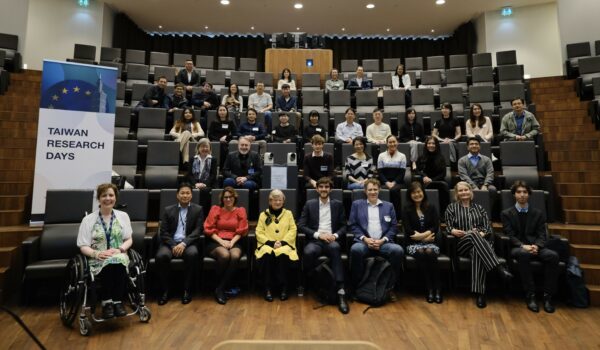
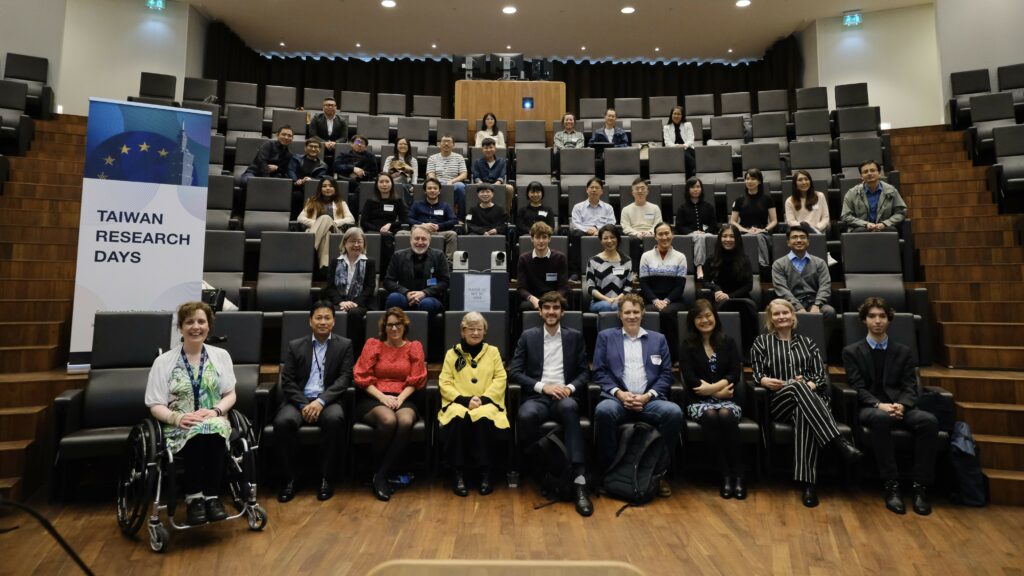
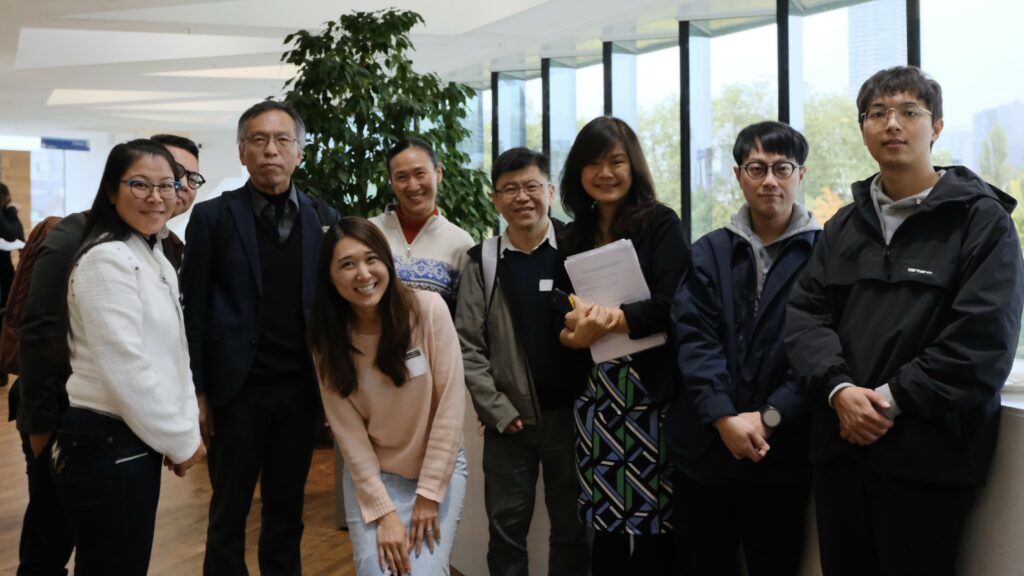
「臺荷生醫及精準醫療科技研討會」(Taiwan Research Days)會後的大合照。(圖片來源:駐歐盟兼駐比利時台北代表處科技組)
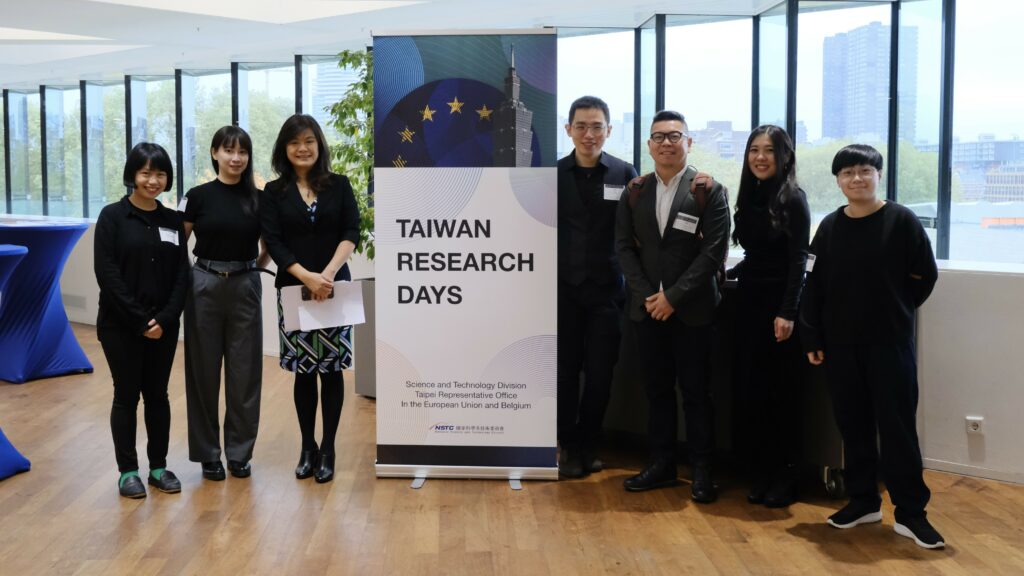
2024年10月20~21日,首屆「臺荷生醫及精準醫療科技研討會」(Taiwan Research Days)於荷蘭烏特勒支(Utrecht)及鹿特丹(Rotterdam)登場,象徵臺灣與歐洲科研合作邁向新的里程碑。
活動由鹿特丹伊拉斯謨斯大學醫學中心(Erasmus University Medical Center)副院長Maarten A. Frens與駐荷蘭台北代表處經濟組組長謝佩娟(Jennifer Hsieh)共同揭開序幕。隨後,國際社會科學研究所(International Institute of Social Studies, ISS)的Eva Broer、遠程連線參與的荷蘭在台辦事處Marloes Smeets及荷蘭經濟部國際創新計畫政策官員發表了精彩的致詞,為活動帶來了全球視角下的新思維與啟發!現場參與人數達50至60位,另有40至50位線上觀眾參與,超過百人的熱烈反應為整場活動奠定了激動人心的基調。緊接著,由國科會科教發展及國際合作處處長李旺龍深入探討臺灣在國際科教合作領域的未來前景。
研討會由國科會駐歐盟兼駐比利時台北代表處科技組組長周瑛琪(Dr. Ying-Chyi Chou)揭開序幕,她強調了臺灣在半導體研發領域的關鍵地位及其獨特的科學園區生態系統,充分展現了臺灣在全球科技舞台上的重要角色,同時也為國際合作開啟了全新契機。隨後,荷蘭研究委員會(Dutch Research Council, NWO)的資深政策官Berry Bonenkamp介紹了臺灣國家科學技術委員會(National Science and Technology Council, NSTC)與NWO的深入合作,展示了雙方在「龍門計畫」中的努力,推動技術、科學、人文及社會科學的突破,讓台歐合作在全球舞台上大放異彩。臺灣半導體研究中心副主任莊英宗博士深入分析,結合台夫特理工大學(TU Delft)芮裕馨教授的精彩主持,讓與會者充分了解臺歐在晶片設計合作的最新成果,並激發了更多關於未來技術創新合作的無限可能。
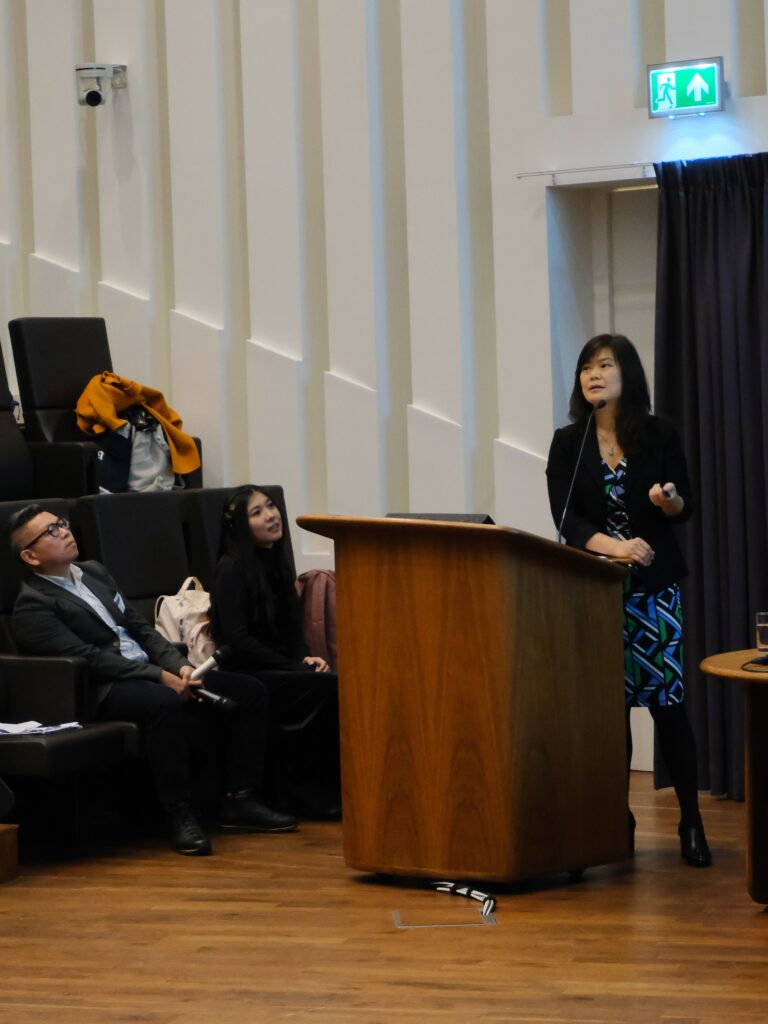
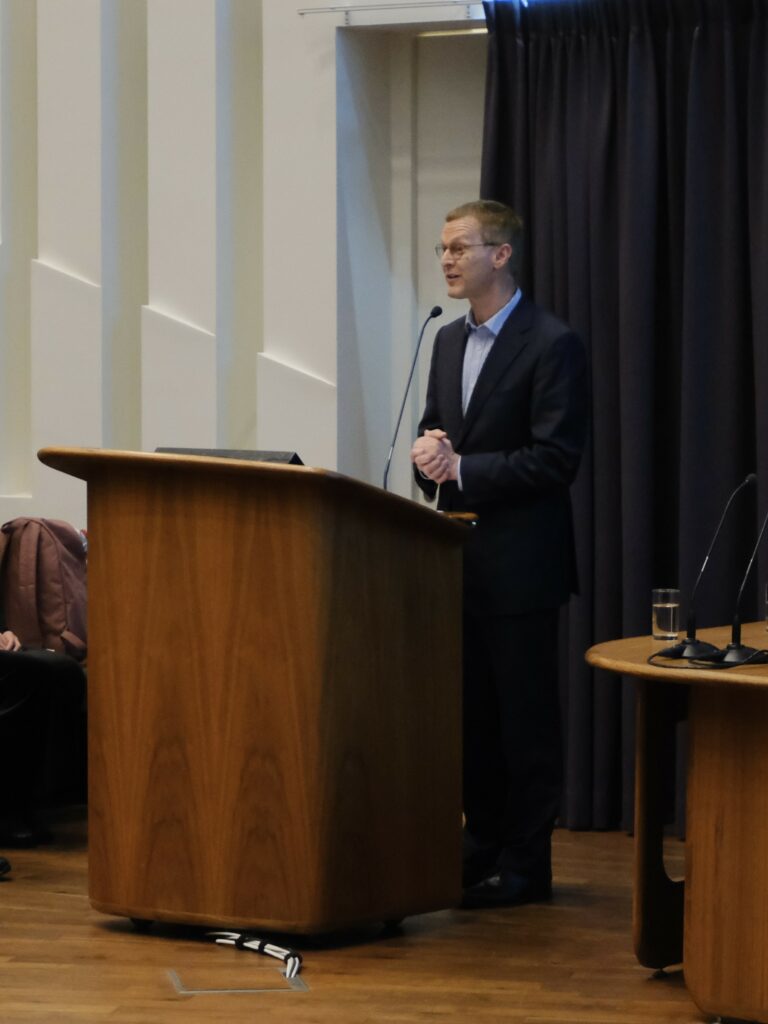
左:國科會駐歐盟兼駐比利時台北代表處科技組組長周瑛琪;右:荷蘭研究委員會(NWO)資深政策官Berry Bonenkamp。
接下來,失智照護設計專家Barbara J. Huelat與臺中榮民總醫院的林時逸醫師帶領我們深入了解荷蘭獨特的「失智村」(霍格威村,Hogeweyk),共同探討如何打造以人為本的照護環境。在烏特勒支大學醫學中心(University Medical Center Utrecht)的Oscar H. Franco醫師主持下,這場演講不僅分享了荷蘭的創新照護模式,還深入探討了這些模式如何有效提升患者的生活品質,並提出如何以更有溫度的方法來關懷老年患者的思考,為生物醫學領域提供了全新的研究視角與方向。
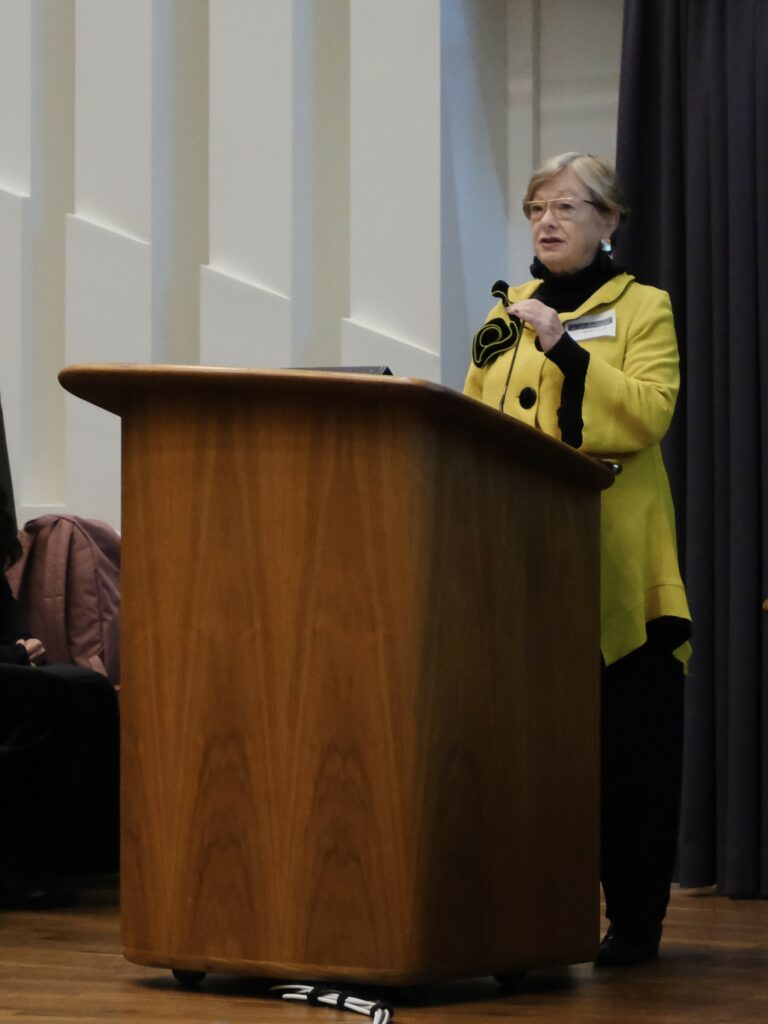
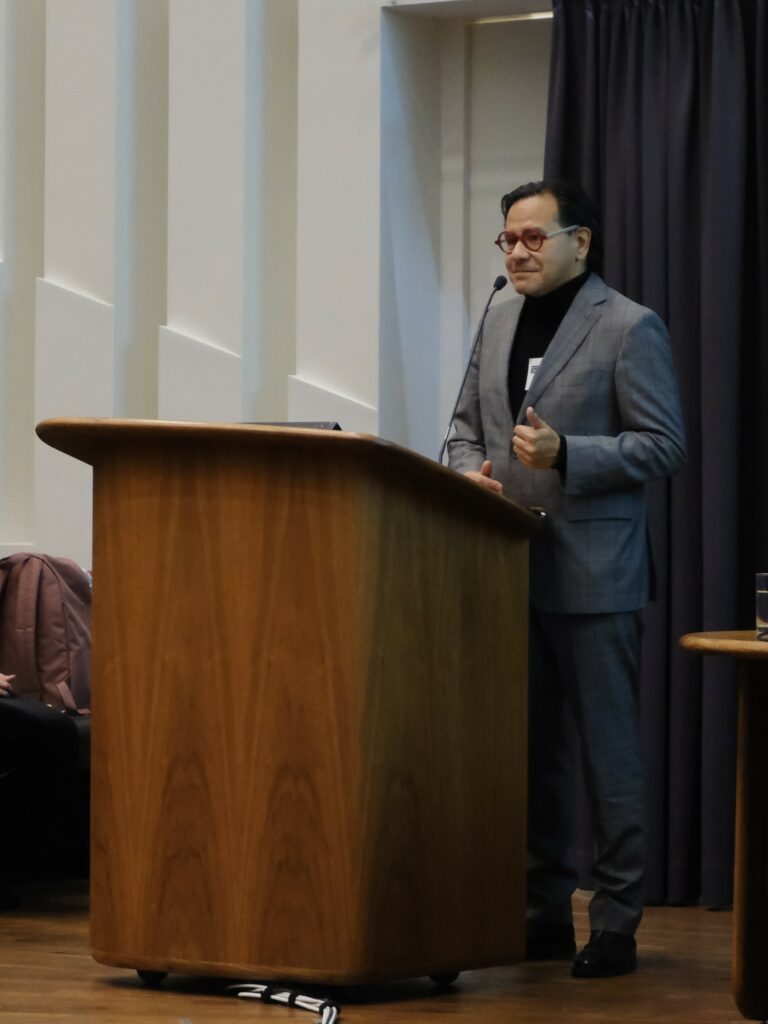
左:失智照護設計專家Barbara J. Huelat;右:烏特勒支大學醫學中心(University Medical Center Utrecht)的Oscar H. Franco醫師。
在下午的活動中,湍特大學(University of Twente)的Dr. Jelmer Renema與萊頓大學(Leiden University)的Dr. Michiel De Dood帶領我們深入探討與臺灣的淡江大學吳俊毅Jun-Yi W教授團隊科研合作成果,展示了雙方技術上的互補性。龍門計畫的案例分享的部分,由湍特大學的Dr. A.H. Gijlers與陳欣珏博士,以及鹿特丹伊拉斯謨斯大學醫學中心的黃歆博士與簡妙萍教授所帶來的洞察。在氣候變遷教育領域,旨在結合多模態學習分析與人工智慧技術,提升氣候變遷課程的數位化教學效果。雙方的研究人員共同展示了如何藉由AI技術分析學習者行為,進行個性化教學,並強調了這項技術在全球應對氣候挑戰中的潛力。而在Antoinette Maassen van den Brink教授的精彩主持下,這場跨學科對話不只激發了創新的火花,更為科學探索指明了新的方向。同時,與會者還討論未來在博士研究生培訓、雙邊研究計劃資助以及學術與產業之間的合作模式。
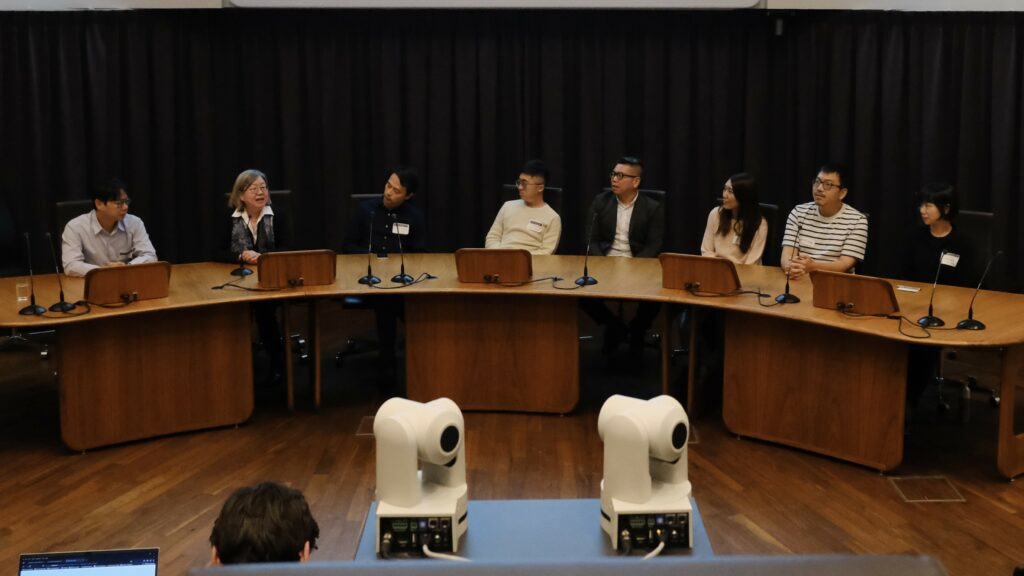
最後的議題是針對台灣教授在海外的經驗分享,埃因霍溫理工大學(TU Eindhoven)的陳玲玲院長和多特蒙德工業大學(TU Dortmund)的陳建佳教授,引領一群年輕學者分享他們的新穎觀點與創新構想。這群充滿活力的學者包括台歐青年學者協會的于欣可博士、臺荷生醫學會的鍾智堯博士、鹿特丹伊拉斯謨斯大學的洪芷寧博士候選人、臺歐科技協會的陳冠旬教授,以及草屯精神科的李青樺醫師。在萊頓大學莊可儒教授的主持下,這場跨學科對話引發了創意的火花,討論年輕學者如何藉由創意思維開創未來。
隨著會議的圓滿落幕,駐歐盟兼駐比利時台北代表處科技組周瑛琪組長與鹿特丹伊拉斯謨斯大學醫學中心的國際事務高級顧問Dr. T.L.R. (Raoul) Tan發表了總結致詞。他們展示了臺灣與荷蘭在生醫及精準醫療科技領域的領先地位,並強調了兩國在科研與技術合作方面的持續深化。此次活動,為臺灣與歐洲在科技與醫療領域的合作奠定更緊密的基礎,雙方將共同努力,推動技術創新與醫療照護邁向新高峰。在充滿創意與合作機會的氛圍中,會議激發了無限靈感,預示著未來更多的精彩合作將持續展開。
—
此次活動由駐歐盟兼駐比利時台北代表處(Taipei Representative Office in the EU and Belgium)、伊拉斯謨斯大學醫學中心(Erasmus University Medical Center)、荷蘭在台辦事處(The Netherlands Office Taipei, NLOT)、台歐青年學者協會(Taiwan-European Association for Young Schlors, TEAS)、台荷生醫學會(Netherlands Taiwanese Biomedical Society)、駐荷蘭台北代表處(Taipei Representative Office in the Netherlands)主辦,台歐科技協會(The European-Taiwanese Association for Science and Technology e.V.)、荷蘭研究委員會(Dutch Research Council, NWO)、Oranje Express 荷事生非攜手合作,將為未來科研合作創造更多機會。「臺荷生醫及精準醫療科技研討會」將進一步加強臺灣與荷蘭,乃至全歐洲的科研聯繫,推動臺灣學術能量被世界看見。
On October 20, 2024, the inaugural “Taiwan Research Day” was held in Rotterdam, the Netherlands, marking a new milestone in scientific collaboration between Taiwan and Europe.
The event was officially opened by Erasmus University Medical Center Vice-Dean Maarten A. Frens and Jennifer Hsieh, Economic Division Director, Taipei Representative Office. Following the opening, inspiring speeches were delivered by Eva Broer, Strategy Policy Advisor of International School of Social Sciences (ISS), Marloes Smeets from Netherlands office Taipei via remote connection, and Renze de Keiser, Policy Officer Programme International Innovation at the Dutch Ministry of Economic Affairs, offering fresh perspectives on global collaboration. With 50 to 60 participants attending in person and an additional 40 to 50 joining online, the enthusiastic response from over a hundred attendees set an exciting tone for the rest of the day. Next, Wang-Long Li, Director General from Department of International Cooperation and Science Education, NSTC explored Taiwan’s future outlook in international scientific cooperation. The symposium brought together top scholars and researchers from Taiwan and the Netherlands to engage in in-depth discussions on cutting-edge topics such as biomedicine, precision medicine, semiconductor design, and international cooperation, while exploring innovative opportunities in global technology collaboration.
The symposium continued with a keynote address by Dr. Ying-Chyi Chou, Director of Science & Technology Division Taipei Representative Office in the EU and Belgium, who emphasized Taiwan’s critical role in semiconductor research and development, as well as its unique science park ecosystems. She highlighted Taiwan’s significant position on the global technological stage and opened doors to new international collaborations. Berry Bonenkamp, Senior Policy Officer from Dutch Research Council (NWO), followed with a presentation on the deepening cooperation between the NSTC and NWO, showcasing their joint efforts in the “Dragon Gate” to advance breakthroughs in technology, science, humanities, and social sciences, enabling Taiwan-Europe collaboration to shine on the global stage.
Among the key highlights was the collaboration between Taiwan and Europe in the field of integrated circuit design. Deputy Director from Taiwan Semiconductor Research Institute, TSRI Dr. Ying-Zong Juang ‘s in-depth analysis, paired with the excellent moderation by Dr. Alina Rwei from TU Delft, provided participants with insights into the latest developments in chip design collaboration between Taiwan and Europe, sparking ideas for future innovation and cooperation.
Later, dementia care design expert Barbara J. Huelat and Dr. Shih-Yi Lin from Taichung Veterans General Hospital guided attendees through the unique “dementia village” (Hogeweyk) in the Netherlands, exploring how to create a people-centered care environment. Moderated by Dr. Oscar H. Franco from the University Medical Center Utrecht, this session not only shared innovative care models from the Netherlands but also delved into how these approaches can improve patients’ quality of life, offering new perspectives on how to provide more compassionate elder care, thus contributing fresh insights to the field of biomedicine.
In the afternoon, Dr. Jelmer Renema from the University of Twente and Dr. Michiel De Dood from Leiden University led us in a deep exploration of the research collaboration outcomes with Dr. Jun-Yi Wu’s team from Tamkang University in Taiwan. They showcased the complementary technological strengths of both sides. While the Netherlands is known for its low-loss quantum processors and quantum architecture design, Taiwan leads in photon sources and quantum information processing technology. Both research teams emphasized that through joint experimental research, they will further advance the design and optimization of photonic computing components, as well as enhance applications in quantum communication and quantum sensing technologies.
Through case studies from the Dragon Gate, Dr. A.H. Gijlers, Dr. Hsin-Chueh(Lily) Chen from the University of Twente, Dr. Hsin Huang from Erasmus University Medical Center, and Dr. Miao-Ping Chien brought valuable insights. In the field of climate change education, their research aimed to combine multimodal learning analysis and artificial intelligence (AI) technology to enhance the digital teaching effectiveness of climate change courses. The researchers demonstrated how AI technology can analyze learners’ behavior and personalize education, while highlighting the potential of this technology to tackle global climate challenges. Under the excellent moderation of Dr. Antoinette Maassen van den Brink, this cross-disciplinary dialogue not only sparked innovative ideas but also pointed the way to new directions in scientific exploration. Additionally, participants discussed future possibilities in doctoral training, bilateral research project funding, and academic-industry collaboration models. Both sides look forward to deepening cooperation in areas such as research funding, talent cultivation, and the transformation of scientific and technological achievements through initiatives like the Academia Sinica, German Academic Exchange Service (DAAD), and EU Erasmus+ programs.
In today’s special session, Lin-Lin Chen Dean of Eindhoven University of Technology (TU/e) and Dr. Jian-Jia Chen from TU Dortmund of bled a group of dynamic young scholars in sharing their fresh perspectives and innovative ideas. These vibrant scholars included Dr. Cinco Hsinko Yu from the Taiwan-European Association for Young Scholars(TEAS), Dr. Chih-Yao Chung from the Netherlands Taiwanese Biomedical Society, PhD candidate Tze-Ning Hong from Erasmus University Rotterdam, Dr. Kuan-Hsun Chen from the European-Taiwanese Association for Science and Technology e.V., and MD., MPH, Ching-Hua(Julie) Lee from attending Psychiatrist at Tsaotun Psychiatric Center. Moderated by Dr. Ko-Ju Chuang, this cross-disciplinary discussion ignited creative sparks, exploring how young scholars can shape the future through creative thinking.
As the conference drew to a successful close, Ying-Chyi Chou, Director of Science & Technology Division Taipei Representative Office in the EU and Belgium, and Dr. T.L.R. (Raoul) Tan, Senior Advisor, International Affairs, Research Development office (RDO), Erasmus University Medical Center, delivered the concluding remarks. They showcased the leading positions of Taiwan and the Netherlands in the fields of biomedicine and precision medicine, while emphasizing the deepening cooperation between the two countries in research and technology. This event has laid a solid foundation for even closer cooperation in the fields of science, technology, and healthcare between Taiwan and Europe. With endless creativity and collaborative opportunities, the conference inspired countless ideas, heralding a future filled with exciting partnerships and innovations.


發佈留言